
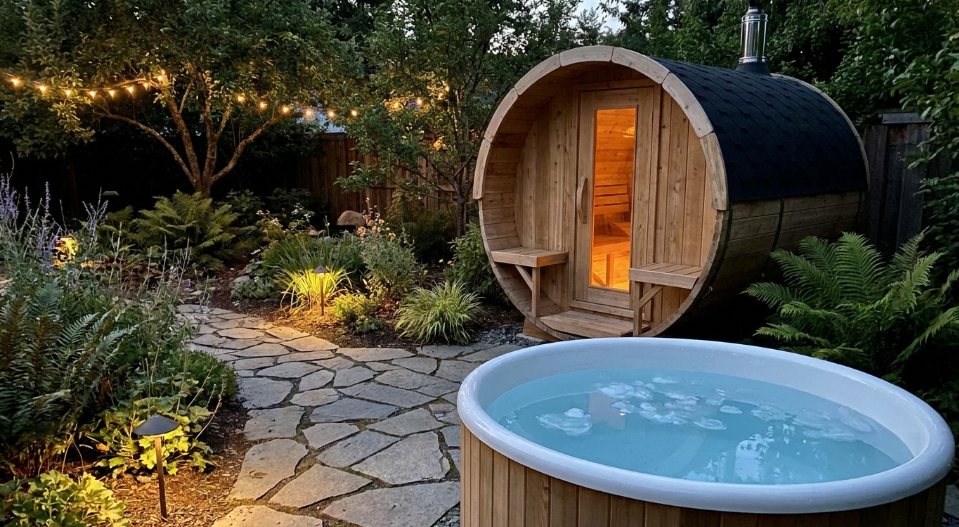
A home sauna needs a level, stable, well-drained base, and the three most common options are a compacted gravel pad, a paver or concrete block base, and a poured concrete slab. Gravel is the cheapest and easiest to install, concrete is the most permanent, and an existing deck can work if the framing is sound and the surface is level. Setting a sauna directly on dirt or grass is the one option that reliably shortens its life.
1. Compacted gravel pad
A compacted gravel pad is the most common base for a barrel or small cabin sauna, and for good reason. Materials run roughly $150 to $400 for a small pad, and the work, excavating a few inches of topsoil, adding a landscape fabric layer, and compacting crushed gravel in lifts, can often be done in a weekend. Gravel drains well, which matters more for a sauna base than people expect, since standing water under a wood floor is one of the fastest ways to rot a base frame. The tradeoff is that gravel needs occasional releveling as it settles, and it is not the best surface if the sauna will ever need to be moved on a dolly or cart.
2. Paver or concrete block base
Pavers or concrete blocks set on a compacted gravel or sand bed step up in cost and durability from gravel alone, typically running $300 to $800 including materials and labor for a small to mid-size footprint. This option gives a flatter, more finished surface than loose gravel while still allowing some drainage between the paver joints. It is a reasonable middle option for anyone who wants something more solid than gravel but does not want the cost or permanence of a poured slab.
3. Poured concrete slab
A poured concrete slab is the most durable and longest-lasting base for a permanent sauna installation, typically running $800 to $2,500 depending on size and how much site prep and grading the ground needs first. Concrete holds level over decades better than gravel or pavers, resists frost heave better when poured to proper depth in cold climates, and gives the cleanest surface for a heavy cabin-style sauna. The downside is cost and permanence: a concrete slab is not something to redo if plans change later, so it makes the most sense for a sauna that is not going to move.
4. An existing wood deck
Placing a sauna on an existing deck can work well and saves the cost of a new base entirely, provided two things check out first. The deck framing needs to be rated for the sauna’s weight, which for a mid-size cabin with people inside can run 1,500 to 2,500 pounds or more once fully loaded, so joist spacing and general condition matter. The deck surface also needs to be level to the same tight tolerance a ground-level pad would need, since sauna doors and roof seams do not tolerate even a slight slope well. A deck built for general outdoor furniture is not automatically rated for a sauna’s concentrated weight, so this is worth confirming with whoever built it, or a contractor, before assuming it will work.
5. Composite or synthetic decking
Composite decking sits between a wood deck and a concrete slab in terms of suitability. It does not rot the way natural wood can from ground moisture, which is an advantage, but it can also flex more than expected under heavy point loads if the underlying joist structure is not sized correctly for the added weight. As with a wood deck, the framing underneath, not just the surface material, determines whether it is a safe base.
What to avoid entirely
Dirt and grass are the one option that consistently causes problems. Ground moisture wicks up into wood bases and steel frames over time, the surface underneath shifts with rain and frost, and grass dies under the footprint anyway, turning to mud that tracks back into the sauna. Even a temporary placement on bare ground is worth avoiding if there is any chance the sauna will stay more than a few weeks. For anyone comparing base options while also shopping for the unit itself, checking each cabin’s listed weight and footprint at https://sweatdecks.com before finalizing a pad size is a reasonable way to make sure the base being built actually matches the model being ordered, rather than guessing at dimensions ahead of time.
Getting the level right matters more than the material choice
Whichever base material is chosen, most manufacturers specify a tolerance of about a quarter inch of level across the full footprint. That is tighter than it sounds. A pad that looks flat to the eye can still be off enough to bind a door or leave a visible gap in a roof seam once the unit is fully assembled and settled. Checking level with an actual level, not a visual estimate, at multiple points across the pad before setting the sauna down saves a frustrating readjustment later. This step matters regardless of whether the base is gravel, pavers, concrete, or an existing deck, and it is worth the extra twenty minutes every time.
Does the base affect the actual benefit of sauna use?
Not directly. Whatever sits under the cabin, gravel, pavers, concrete, or a rated deck, has no bearing on the heat exposure itself once the unit is level and sealing properly. Review literature on regular sauna bathing has associated frequent use with a range of cardiovascular and general wellness outcomes, and a broader review of the physiological effects of heat and cold exposure covers similar ground on how the body responds to sustained sauna heat. Those associations are about time spent at temperature, not about what the floor underneath is made of. Where the base does matter indirectly is keeping the cabin sealing and heating correctly over years of use, since a settled, uneven pad eventually costs efficiency and comfort even though it does not change what the research measures.
Frequently Asked Questions
Can a home sauna sit directly on grass or dirt?
It can temporarily, but it is not recommended long term. Ground moisture wicks into the base, uneven settling can throw the door out of alignment, and grass underneath dies and turns to mud, which then splashes back onto the unit.
Is gravel or concrete better under a sauna?
Both work well. Gravel drains better and costs less, while concrete is more permanent and easier to keep level over many years. Concrete is usually the better choice for a sauna expected to stay in one place indefinitely.
Can I put a sauna on an existing wood deck?
Often yes, provided the deck framing can handle the added weight and the boards are structurally sound. Check joist spacing and condition first, and confirm the deck surface is level, since a sauna base is not forgiving of even a small slope.
How level does the ground need to be under a sauna?
Very level. Most manufacturers specify a tolerance of about a quarter inch across the base. Even a slight slope can cause the door to bind, the roof seams to shift, and water to pool on one side.
Do I need a permit for a sauna base or foundation?
It depends on your municipality and whether the base counts as a permanent structure. A gravel pad rarely triggers a permit, while a poured concrete slab sometimes does. Check with your local building department before starting site work.
References
- Cardiovascular and Other Health Benefits of Sauna Bathing: A Review of the Evidence, Mayo Clinic Proceedings, 2018
- Clinical Effects of Regular Dry Sauna Bathing: A Systematic Review, Evidence-Based Complementary and Alternative Medicine, 2018
- Benefits and risks of sauna bathing, The American Journal of Medicine, 2001

